

The Oceanaire Oysters
Fresh, half-shell oysters flown in daily from the coasts to your table.
The Oceanaire Seafood Room rotates its oyster selection by season and quality, sourcing from multiple North American regions and species to offer a range of flavors, from mild and sweet to sharp and briny. Every oyster is served on the half shell and shucked to order.
Our Oysters at a Glance
- 5 species
Pacific, Atlantic, Kumamoto, Olympia and European Flat, rotating by season.
- 3 regions
The Pacific Northwest, the East Coast and Duxbury Bay, Massachusetts.
- Pearls
Our signature Oceanaire Pearls, grown in Duxbury Bay.
- To order
Every oyster is served on the half shell and shucked when you order it.
Oyster Species at The Oceanaire
Five oyster species rotate through The Oceanaire's raw bar. Each has a distinct flavor profile and typical shell size.
| Oyster | Flavor profile | Size |
|---|---|---|
| Pacific (Japanese)Crassostrea gigas | Mild and slightly sweet, with a clean finish and crisp texture. | 3–4 in. |
| Atlantic (Eastern)Crassostrea virginica | Briny, with strong salinity and a meaty, silky texture. Oceanaire Pearls are Atlantic oysters. | 3–4 in. |
| KumamotoCrassostrea sikamea | Deep-cupped and compact, with a sweet cucumber-melon flavor and creamy finish. | 2–3 in. |
| OlympiaOstrea lurida | Tiny but intense: sweet, earthy and briny, with a metallic finish. The only oyster native to the West Coast. | 2–3 in. |
| European FlatOstrea edulis | Salty, briny, coppery and flinty, with a pronounced finish often compared to a copper penny. | 2–3 in. |
Merroir: Like wine, an oyster's flavor is shaped by its merroir: the water, salinity, temperature, algae and grow-out method of the place it was raised. The same species grown in two bays can taste noticeably different.
Where Our Oysters Come From
The Oceanaire works with growers in three core regions on both coasts of North America.
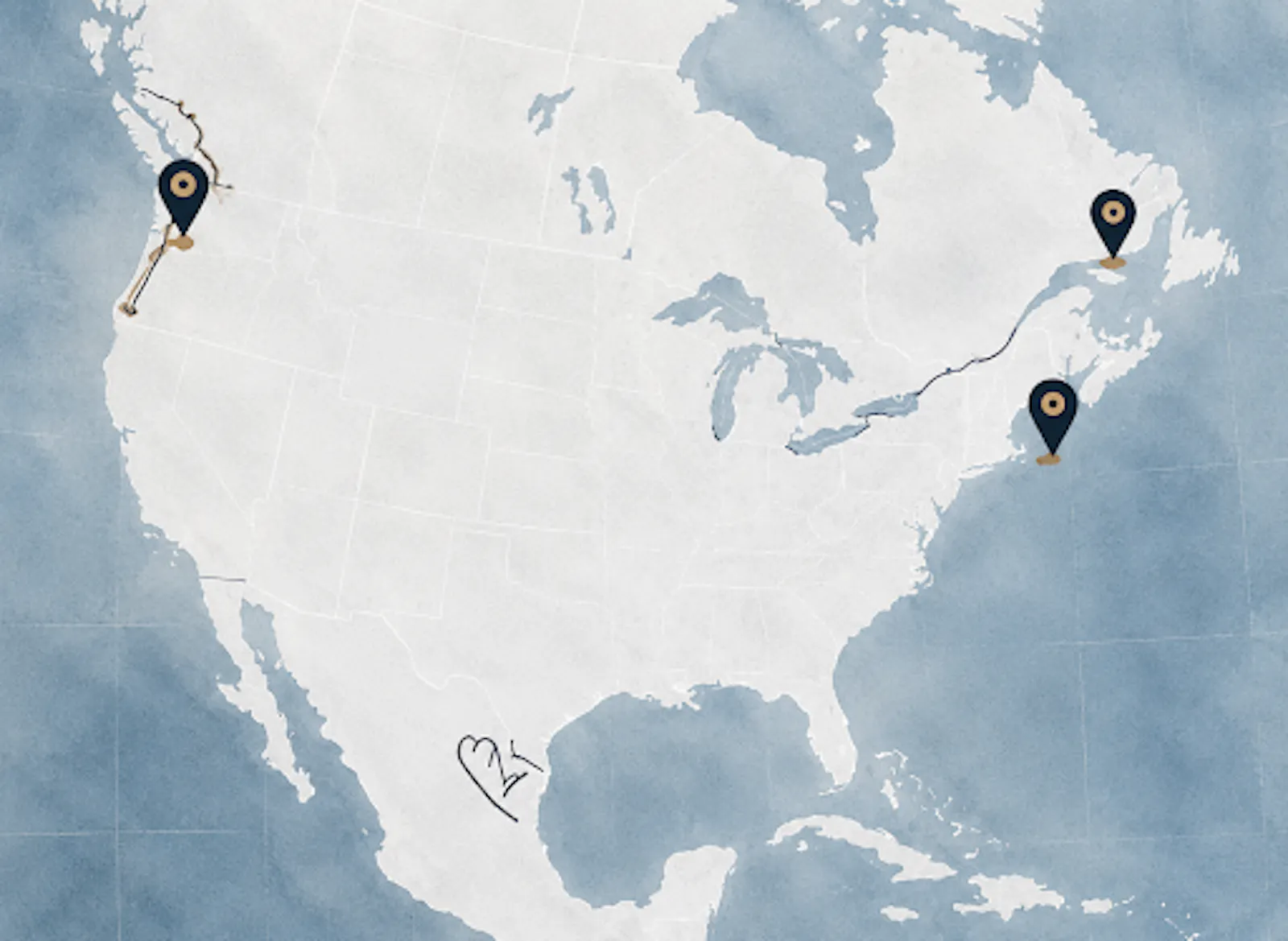
Pacific Northwest
Washington, Oregon and Alaska
Boutique farms in Washington's Hood Canal and beyond, where cold, clean Pacific waters produce crisp, clean-finishing oysters.
East Coast
Long Island Sound and Nova Scotia
Cold, nutrient-rich North Atlantic waters produce firm oysters with a pronounced briny flavor.
Duxbury Bay, Massachusetts
Home of Oceanaire Pearls
Nutrient-rich tides moving through the bay create ideal growing conditions for our signature Oceanaire Pearls.
Oceanaire Pearls
Our signature oyster, grown in Duxbury Bay, Massachusetts.
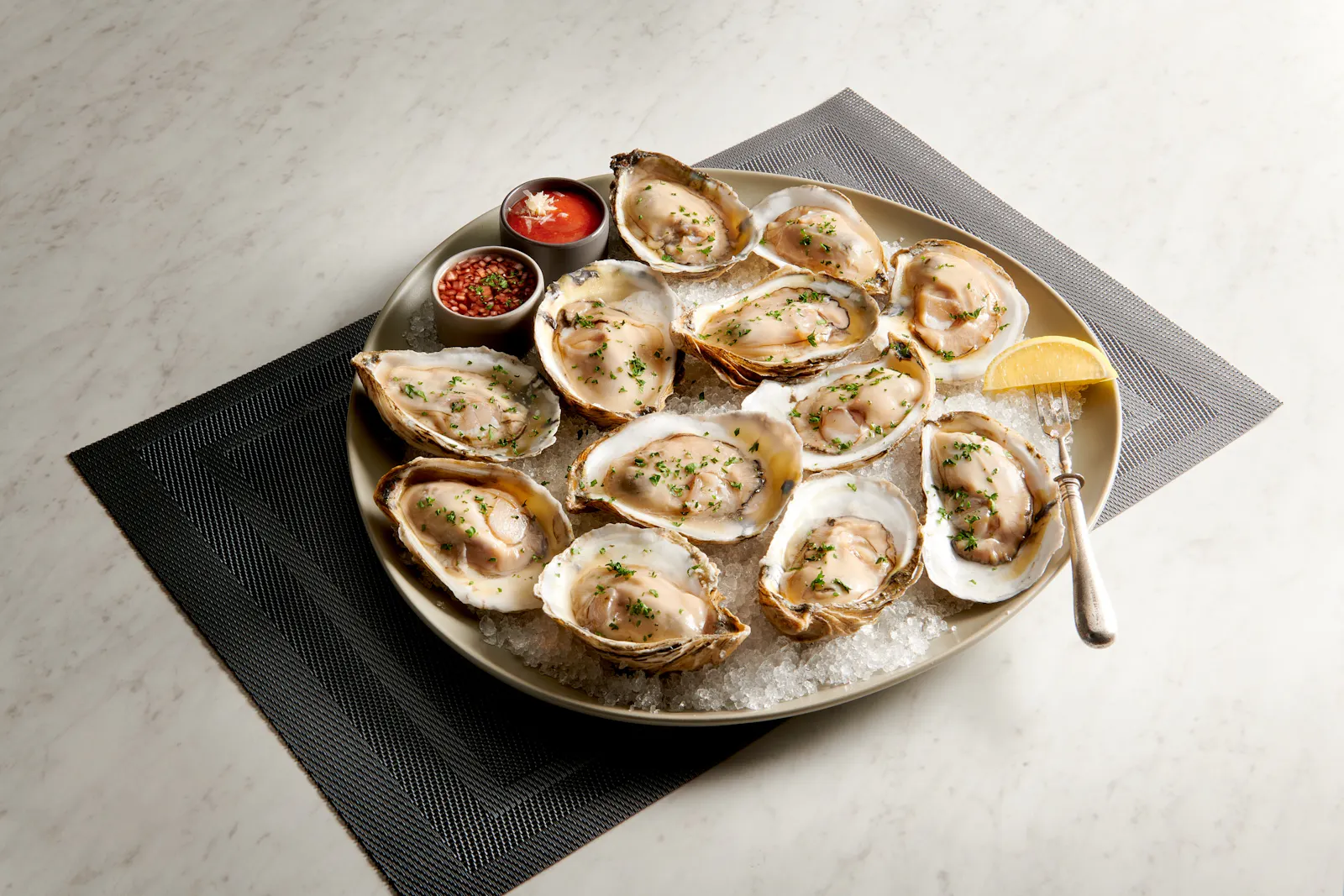
Sharp brine, a buttery texture and a crisp mineral finish.
Duxbury Bay sits within Cape Cod Bay, where 9- to 12-foot tides flood in twice a day and feed the oysters nutrient-rich water. The water is warm enough to provide plenty of food, yet cold enough to keep them plump all year.
- Species
- Atlantic (Eastern) oyster
- Grown in
- Duxbury Bay, Massachusetts
- Method
- Caged, bottom culture
- Grow-out time
- 18 to 24 months
- Tides
- 9 to 12 feet, twice a day
- Bottom
- Sand and silted tidal flats
What Affects How an Oyster Tastes
The same species can taste completely different from one bay, season or year to the next. These are the biggest factors, and the last one is up to you: your own palate.
The water
Like grapes in a vineyard, oysters take on the character of where they grow: salinity, temperature, nutrients and algae. This is merroir.
The growing method
Bottom culture, suspended bags and trays, or beach culture each shape an oyster's shell, meat and flavor.
Age
Younger oysters taste clean and light. Older oysters are bolder and more robust, like a young white wine next to an aged red.
Season and spawning
An oyster's reproductive cycle changes its meat yield and flavor through the year.
The vintage
Like wine, every year's harvest is a little different.
After the harvest
Time and temperature matter. Oysters kept cold and served fresh taste the way they should.
Oyster FAQs
What types of oysters does The Oceanaire offer?
The Oceanaire features a rotating selection of premium oysters sourced from some of North America's most respected growing regions. Depending on seasonality and availability, you'll find Pacific, Atlantic (Eastern), Kumamoto, Olympia and European Flat oysters, plus our signature Oceanaire Pearls. Each variety offers its own balance of brine, sweetness, texture and finish.
How do oyster flavors change by species and region?
Every oyster reflects the waters where it is grown, a concept known as merroir. Water temperature, salinity, tides, algae and farming methods all influence flavor. Pacific oysters are often mild and sweet, Atlantic oysters are typically briny and meaty, Kumamotos are known for a sweet, melon-like finish, and European Flats offer a bold mineral flavor.
Where does The Oceanaire get its oysters?
Our oysters come from renowned growing regions throughout North America, including the Pacific Northwest, the Atlantic Coast, boutique farms in Hood Canal, and Duxbury Bay, Massachusetts, home of our signature Oceanaire Pearls. We partner with trusted growers committed to quality and sustainable practices.
How does The Oceanaire select its oysters?
Our culinary team selects oysters based on freshness, seasonal availability, growing conditions and overall quality. Because oysters are a natural product, selections rotate frequently so every guest enjoys oysters at their peak.
What makes an oyster high quality?
A premium oyster is harvested fresh, kept properly chilled, tightly closed before shucking, and full of clean, flavorful liquor. High-quality oysters have balanced flavor and firm texture, and they reflect the character of the waters where they were grown.
What regions do The Oceanaire's oysters come from?
The Oceanaire sources oysters from premier oyster-growing regions including Washington, Oregon, Alaska, Long Island Sound, Nova Scotia and Duxbury Bay, Massachusetts. Seasonal offerings vary throughout the year based on harvest conditions.
What are Oceanaire Pearls?
Oceanaire Pearls are The Oceanaire's signature oyster, an Atlantic (Eastern) oyster grown in Duxbury Bay, Massachusetts. They are raised in cages on the bay bottom for 18 to 24 months, where 9- to 12-foot tides bring nutrient-rich water twice a day. They are known for sharp brine, a buttery texture and a crisp mineral finish.
What affects how an oyster tastes?
An oyster's flavor is shaped by the water it grows in, its growing method, its age, the season and its spawning cycle, the conditions of that year's harvest, and how it is handled after harvest. Younger oysters tend to taste cleaner and lighter, while older oysters are bolder. Your own palate plays a role too.
What is the difference between triploid and diploid oysters?
Diploid oysters have two sets of chromosomes and reproduce naturally. During spawning their meat can turn soft and watery and their liquor cloudy, so they are traditionally at their best in spring and fall. Triploid oysters have three sets of chromosomes and do not spawn, so they grow faster, stay plump and meaty, and can be enjoyed year-round.
How often do oyster selections change?
The Oceanaire's oyster selection changes regularly based on seasonality, harvest conditions and product quality. Many locations also feature rotating Chef's Selections and oyster specials throughout the week.
Learn More About Oysters
Ready to Experience the Difference?
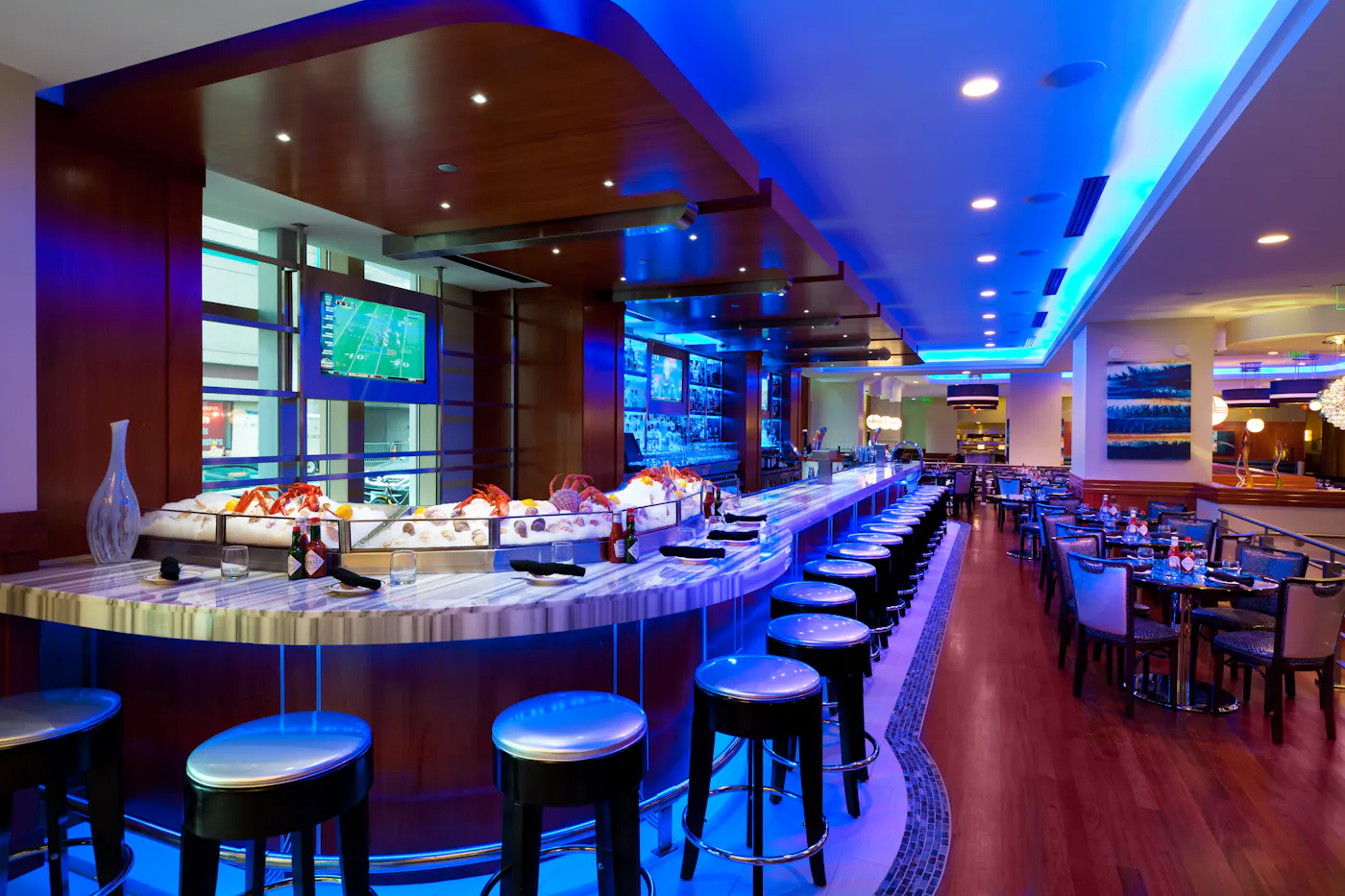
Today's oysters are on ice at every Oceanaire raw bar. Pick your city to see the menu, hours and what's shucking near you.
Oyster availability varies by location and season. Consuming raw or undercooked meats, poultry, seafood, shellfish or eggs may increase your risk of foodborne illness. See our oyster safety guide.